


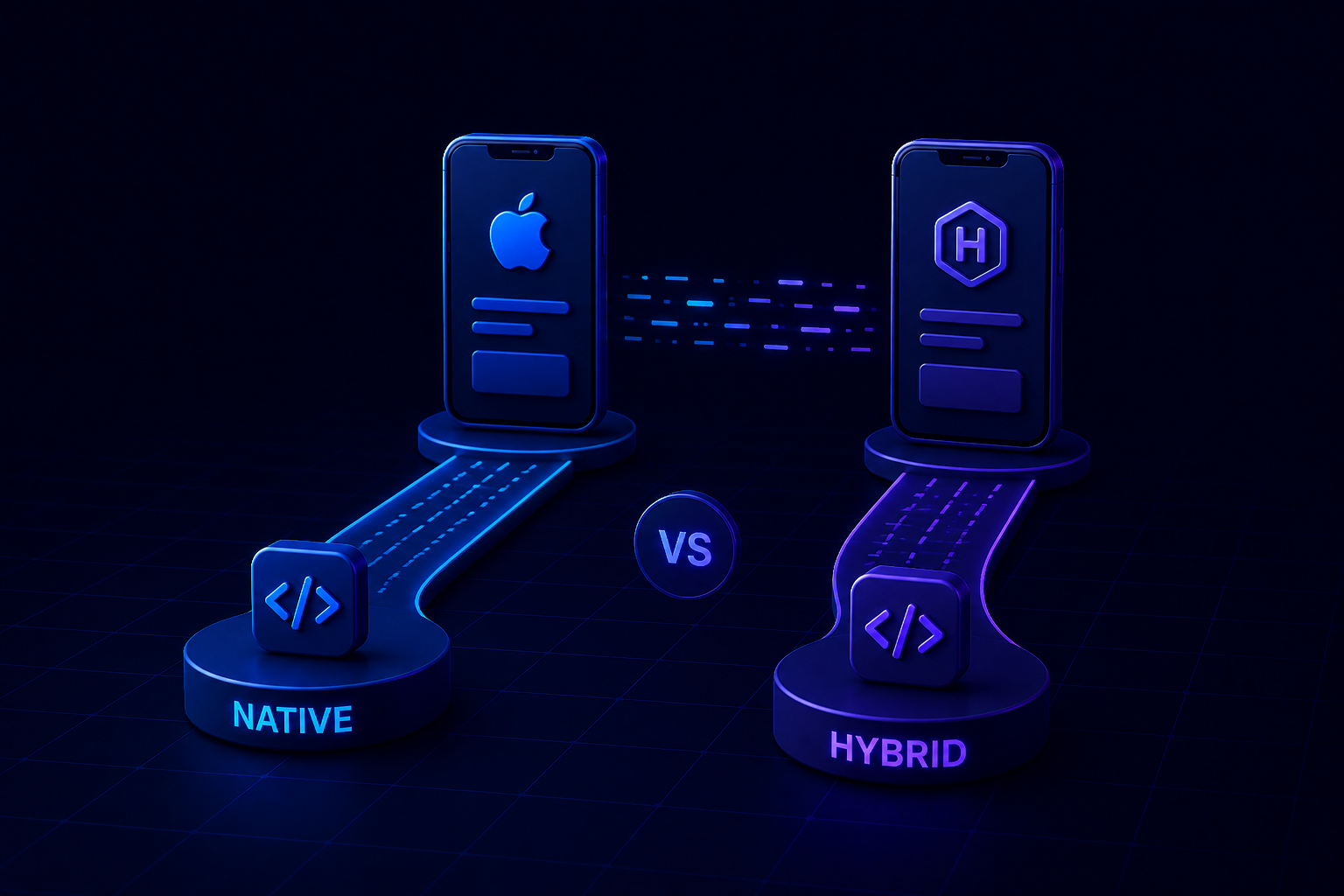
Embarking on a new mobile app project? One of the first crucial decisions you’ll face is choosing between native vs hybrid apps. This choice significantly impacts your development timeline, budget, performance, and overall user experience. Let’s dive into the core differences to help you make an informed decision for your mobile app development.
Native Mobile Apps: The Platform-Specific Powerhouses
Native apps are built specifically for a particular operating system (OS), like iOS using Swift/Objective-C or Android using Java/Kotlin. They leverage the device’s native functionalities and APIs directly, offering unparalleled integration and performance.
Advantages of Native Development:
- Superior Performance and Speed: Native apps are optimized for their specific platform, resulting in faster performance, smoother animations, and a highly responsive user interface.
- Unmatched User Experience (UX): They adhere to the specific UI/UX guidelines of each platform, providing a seamless and familiar experience that feels truly “at home” on the device.
- Full Device Feature Access: Native apps can effortlessly access all device features, such as the camera, GPS, microphone, and gestures, without any limitations or compromises.
- Enhanced Security and Stability: Built with platform-specific tools and frameworks, they often offer better security and stability.
Disadvantages of Native Development:
- Higher Development Costs: You need separate codebases and often separate development teams for iOS and Android, leading to increased costs and longer development times.
- Slower Time-to-Market: Developing two distinct apps means a longer overall development cycle.
- More Complex Maintenance: Maintaining two separate apps can be more resource-intensive.
Hybrid Mobile Apps: The Cross-Platform Compromise
Hybrid apps are built using web technologies like HTML, CSS, and JavaScript, and then wrapped in a native container. This allows a single codebase to run on multiple platforms, making them a popular choice for many businesses focused on efficiency in mobile app development.
Advantages of Hybrid Development:
- Cost-Effective: With a single codebase, you save significantly on development costs and resources compared to building two separate native apps.
- Faster Development and Time-to-Market: Develop once and deploy across multiple platforms, drastically reducing development time.
- Easier Maintenance: Maintaining one codebase is simpler than managing two separate ones.
- Wider Audience Reach: Launching on both iOS and Android simultaneously helps you reach a broader user base faster.
Disadvantages of Hybrid Development:
- Potential Performance Limitations: While modern hybrid frameworks have improved, they might not match the raw speed and responsiveness of native apps, especially for graphically intensive applications.
- Limited Access to Native Features: Accessing some advanced device functionalities can be more complex or require third-party plugins, potentially leading to compromises.
- Dependency on Frameworks: You are reliant on the chosen hybrid framework (e.g., React Native, Flutter, Ionic) and its updates.
- Inconsistent UI/UX: Achieving a perfectly native look and feel on both platforms can be challenging without significant customization.
Native vs Hybrid Apps: Key Factors for Your Decision
Choosing between native vs hybrid apps isn’t about one being universally “better,” but rather which one aligns best with your project’s specific needs and goals. Consider these factors:
- Performance Requirements: If your app demands high performance, complex animations, or quick responsiveness (e.g., gaming, intensive graphics), native is usually the way to go.
- Budget and Timeline: For projects with tighter budgets and shorter deadlines, hybrid development offers a compelling advantage due to its single codebase approach.
- Specific Features: Does your app rely heavily on cutting-edge device hardware features (e.g., AR/VR, advanced camera functions)? Native provides more direct and seamless integration.
- User Experience Goals: If a perfectly platform-specific UI/UX is paramount for your brand, native development allows for pixel-perfect adherence to guidelines.
- Target Audience: Consider whether your audience prioritizes cutting-edge performance or broader accessibility across devices.
Making the Right Choice for Your Mobile App Development
Ultimately, the “better” option for your mobile app development depends entirely on your unique circumstances.
- Choose Native If:
- Performance and speed are critical.
- You need to leverage all device features seamlessly.
- A truly authentic platform-specific user experience is paramount.
- Your budget allows for separate development streams.
- Choose Hybrid If:
- Cost-effectiveness and faster time-to-market are your top priorities.
- Your app has standard functionalities and doesn’t rely heavily on complex device features.
- You want to reach both iOS and Android users with a single codebase.
- An “acceptable” performance level is sufficient for your user base.
Before committing, thoroughly evaluate your project’s scope, long-term vision, and available resources. Sometimes, a combination of approaches, or even a progressive web app (PWA), might be the optimal solution. Engaging with experienced mobile app development experts can provide tailored advice for your specific venture.

No Comments